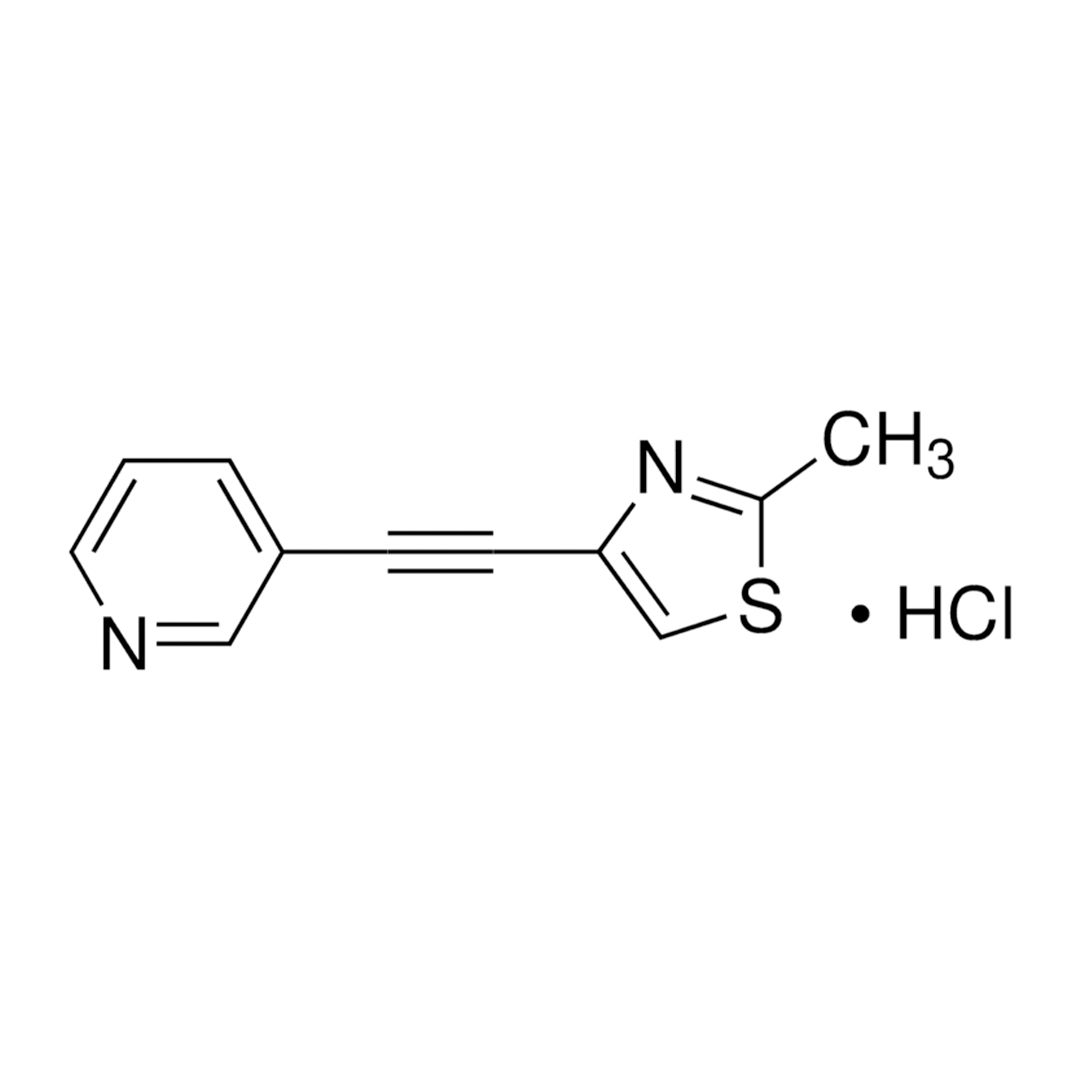


Description
MTEP HCl Nootropic Powder








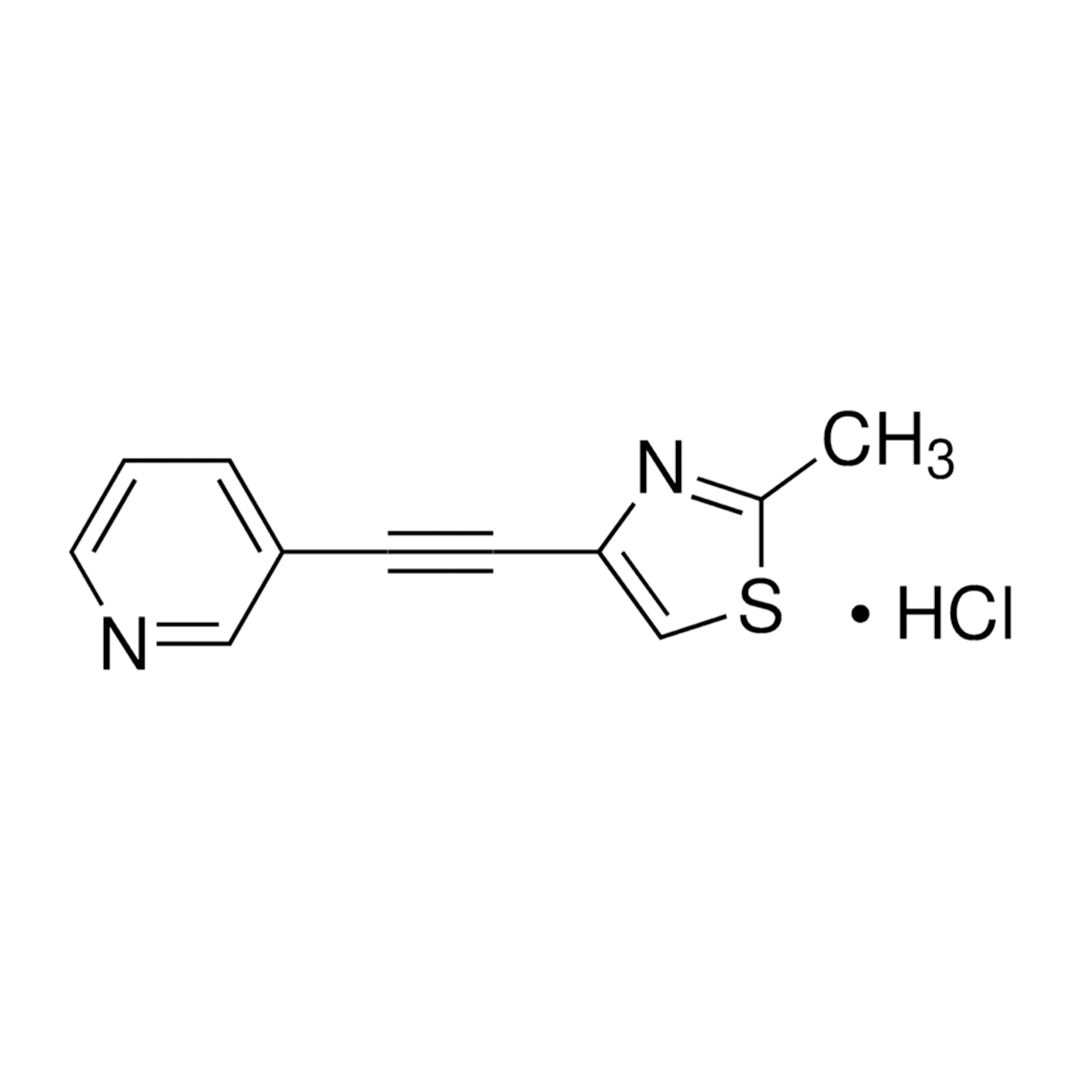
| CAS Number | 1186195-60-7 |
| Other Names | MTEP hydrochloride, 3-[(2-methyl-1,3-thiazol-4-yl)ethynyl]pyridine hydrochloride |
| IUPAC Name |
3-((2-methyl-4-thiazolyl)ethynyl)pyridine hydrochloride
|
| Molecular Formula | C₁₁H₈N₂SHCl |
| Molecular Weight | 236.72 |
| Purity | ≥99% Pure (LC-MS) |
| Liquid Availability | N/A |
| Powder Availability |  N/A |
| Storage | Store in cool dry environment, away from direct sunlight. |
| Terms | All products are for laboratory developmental research USE ONLY. Products are not for human consumption. |
What is MTEP HCl?
MTEP (3-((2-Methyl-4-thiazolyl)ethynyl)pyridine) is a highly selective, noncompetitive antagonist of the metabotropic glutamate receptor subtype 5 (mGluR5) that has become an important experimental compound for investigating the role of glutamatergic signaling in learning, memory, addiction, anxiety, and numerous neurological disorders. By selectively inhibiting mGluR5 activity, MTEP modulates excitatory neurotransmission without directly affecting ionotropic glutamate receptors, allowing researchers to examine the contribution of mGluR5 to synaptic plasticity, neuronal excitability, and cognitive function. Preclinical studies have demonstrated that MTEP can reduce drug-seeking behaviors, attenuate anxiety-like responses, improve certain cognitive deficits associated with neuropsychiatric disorders, and provide neuroprotective effects in models of fragile X syndrome, Parkinson’s disease, and chronic pain. Although its ability to alter glutamatergic neurotransmission has generated interest in its potential therapeutic applications, MTEP remains an investigational research compound regarding the mechanisms of mGluR5 signaling and guiding the development of more clinically viable glutamate-based therapies.
Main Research Findings
1) Administration of MTEP was shown to have neuroprotective effects against seizures and behavioral comorbidities in an animal model of epilepsy.
2) Treatment with MTEP was selected for drug-detected behavior and found to have the potential to prevent cocaine relapse.
Selected Data
1) The study performed by the research team of Dyomina et al investigated whether MTEP, a selective mGluR5 antagonist, could prevent epileptogenesis, reduce neuronal damage, and improve behavioral outcomes in a rat model of temporal lobe epilepsy. Adult male Wistar rats were housed under standardized laboratory conditions with unrestricted access to food and water and maintained on a 12-hour light/dark cycle. Animals were randomly assigned to three experimental groups: a healthy control group receiving saline, a pilocarpine-induced epilepsy (Pilo) group, and an epilepsy group treated with MTEP following status epilepticus (SE). All experimental procedures were conducted in accordance with institutional animal care guidelines and ethical regulations [1].
To induce epilepsy, the investigators used the well-established lithium–pilocarpine model, which closely reproduces the pathological characteristics of human temporal lobe epilepsy, including an initial brain injury, a latent seizure-free period, spontaneous recurrent seizures, hippocampal neurodegeneration, and behavioral comorbidities. Rats first received lithium chloride before treatment with scopolamine methyl bromide to minimize peripheral cholinergic effects. Pilocarpine was subsequently administered intraperitoneally at repeated doses of 10 mg/kg every 30 minutes until animals exhibited continuous seizure activity characterized by rearing behavior. Rats that failed to exhibit seizures after a cumulative pilocarpine dose of 40 mg/kg were excluded from further analysis. Seventy-five minutes after seizure onset, 5 mg/kg of diazepam was administered to terminate status epilepticus and reduce mortality. Ninety minutes after seizure onset, rats assigned to the treatment group received an intraperitoneal injection of 1 mg/kg of MTEP, followed by once-daily injections for five consecutive days during the latent phase of epileptogenesis. This treatment schedule was selected to determine whether early inhibition of mGluR5 signaling could alter disease development before spontaneous seizures emerged.
The investigators evaluated both acute and chronic effects of treatment using a comprehensive experimental design. During the first week following status epilepticus, body weight and survival were monitored to determine whether MTEP influenced recovery from the initial seizure insult. To determine whether treatment altered epileptogenesis, spontaneous recurrent seizures were recorded by continuous video monitoring for 48-hour periods one and two months after status epilepticus. The frequency, duration, and total seizure burden were quantified and compared between treatment groups. Rats that experienced seizures only during behavioral testing or handling were identified, although only video-confirmed spontaneous seizures were included in quantitative analyses [1].
Behavioral assessments were performed during the chronic phase of epilepsy to evaluate neuropsychiatric and cognitive outcomes. Anxiety-like behavior and locomotor activity were assessed using the open field test, which measured time spent in the center versus the periphery of the arena, total distance traveled, movement speed, and general exploratory activity. Depressive-like behavior was evaluated using the sucrose preference test, in which reduced preference for a sucrose solution was interpreted as an indicator of anhedonia. Cognitive function and recognition memory were measured with the novel object recognition test, during which animals were first familiarized with identical objects before one object was replaced with a novel item. Preference for exploring the novel object served as an index of recognition memory and hippocampal-dependent cognitive performance. Exploratory behavior toward unfamiliar objects was also quantified before memory testing to distinguish motivational deficits from cognitive impairmen [1]t.
To determine whether MTEP exerted neuroprotective effects, histological and molecular analyses were conducted on hippocampal tissue during both the latent and chronic phases. Neuronal survival was assessed using Nissl staining, with neuron counts obtained from multiple regions of the CA1 and CA3 hippocampal subfields. Astrocyte activation was evaluated by immunohistochemical staining for glial fibrillary acidic protein (GFAP), and the extent of astrogliosis was quantified by measuring GFAP-positive areas within hippocampal sections. Protein expression of GFAP and the glutamate transporter EAAT2 was measured using Western blotting, while messenger RNA expression of Slc1a2 and Gfap was quantified using reverse transcription quantitative polymerase chain reaction. These molecular analyses were performed seven days after status epilepticus during the latent phase and again during the chronic phase to determine how MTEP influenced glutamate transport, astrocyte activation, and mechanisms of excitotoxicity that contribute to neuronal degeneration [1].
2) This study by Martin-Fardon et al examined the role of the selective mGluR5 antagonist MTEP in cocaine-seeking behavior, conditioned reinstatement, and primary reinforcement using well-established rat models of drug self-administration. A total of 133 adult male Wistar rats weighing 200–250 g upon arrival were housed under controlled temperature and humidity conditions on a reverse 12-hour light/dark cycle with unrestricted access to food and water. All experimental procedures were approved by the Institutional Animal Care and Use Committee of The Scripps Research Institute and conducted in accordance with National Institutes of Health guidelines. Cocaine hydrochloride was dissolved in sterile saline for intravenous administration, while MTEP was dissolved in 10% Tween 80 and administered intraperitoneally at doses ranging from 0.3 to 10 mg/kg approximately one hour before behavioral testing. Behavioral experiments were conducted in standard operant conditioning chambers equipped with active and inactive levers, cue lights, auditory stimuli, syringe pumps for cocaine infusion or sweetened condensed milk (SCM) delivery, and computerized data acquisition systems [2].
To evaluate conditioned drug seeking, rats assigned to cocaine experiments underwent jugular catheter implantation and recovered for one week before behavioral training. Separate groups of rats were trained to self-administer either intravenous cocaine or a highly palatable natural reward consisting of diluted sweetened condensed milk. Cocaine self-administration sessions lasted 120 minutes, whereas SCM sessions lasted 40 minutes. During acquisition, animals responded on a fixed-ratio 1 schedule in which each press on the active lever resulted in delivery of cocaine or SCM followed by a 20-second timeout period signaled by an illuminated cue light. Responses on the inactive lever produced no programmed consequences. After two weeks of stable self-administration, discriminative stimulus training was introduced.
A continuous white-noise stimulus signaled reward availability, whereas illumination of the house light indicated nonreward conditions in which cocaine was replaced with saline or SCM delivery was omitted. Animals completed multiple daily sessions that alternated between reward and nonreward conditions in randomized order, allowing them to learn the association between environmental cues and reward availability. Following eight days of discrimination training, rats entered an extinction phase during which both rewards and discriminative stimuli were withheld until responding declined to fewer than four active-lever responses for three consecutive sessions. Reinstatement testing then began under extinction conditions with reintroduction of the reward-associated cue. Animals received a single dose of MTEP or vehicle one hour before testing in a between-subjects design to determine whether mGluR5 antagonism altered cue-induced reinstatement of cocaine or SCM seeking [2].
Additional experiments assessed whether MTEP altered the reinforcing properties of cocaine or natural reward independent of conditioned cues. Separate groups of rats first acquired stable cocaine or SCM self-administration under a fixed-ratio 5 schedule before receiving each MTEP dose according to a Latin-square crossover design. Cocaine sessions lasted two hours, whereas SCM sessions lasted 30 minutes. Five baseline sessions separated each drug administration to ensure stable response before subsequent dose testing. To determine whether any behavioral changes reflected nonspecific motor impairment, spontaneous locomotor activity was evaluated in experimentally naïve rats housed individually in infrared beam-equipped activity chambers. Animals received vehicle or one of the MTEP doses one hour before testing, and locomotor activity was continuously recorded over a three-hour period. Behavioral endpoints included active and inactive lever responses, cumulative responding throughout sessions, extinction performance, conditioned reinstatement, cocaine and SCM self-administration, and spontaneous locomotion [2].
Statistical analyses included paired Student’s t-tests to compare reward and nonreward responding during conditioning, one-way within- and between-subjects analyses of variance for reinstatement and self-administration measures, mixed-factorial ANOVA for cumulative response analyses, and Newman–Keuls post hoc comparisons when significant main effects or interactions were identified. These complementary behavioral paradigms allowed the investigators to distinguish the effects of MTEP on conditioned motivation, primary reinforcement, and general motor activity while directly comparing responses maintained by cocaine with those maintained by a highly rewarding natural reinforcer [2].
Discussion
1) The study by Dyomina et al found that MTEP treatment produced substantial neuroprotective effects but failed to prevent epileptogenesis or improve the major behavioral abnormalities associated with temporal lobe epilepsy in the lithium–pilocarpine rat model. Administration of MTEP during the latent phase neither improved survival nor altered recovery immediately following status epilepticus. Body weight loss during the first week after seizure induction followed a similar pattern in both the untreated epileptic and MTEP-treated groups, indicating that mGluR5 antagonism did not influence the acute physiological consequences of status epilepticus. More importantly, long-term video monitoring demonstrated that MTEP did not reduce the incidence of spontaneous recurrent seizures, the average duration of seizures, or the cumulative seizure burden measured one and two months after status epilepticus. Nearly all animals in both epileptic groups developed spontaneous seizures with similar frequency and severity, demonstrating that early inhibition of mGluR5 signaling was insufficient to prevent epilepsy or reduce seizure expression once the disease became established [1].
Although seizure development was unaffected, MTEP produced a striking neuroprotective effect within the hippocampus. Histological examination of Nissl-stained brain sections revealed extensive neuronal degeneration in untreated epileptic rats, particularly within the CA1 and CA3 hippocampal regions that are especially vulnerable following status epilepticus. In contrast, animals treated with MTEP exhibited substantial preservation of hippocampal neurons, with neuronal densities that were comparable to those observed in healthy control animals. Quantitative analyses showed that neuron numbers in untreated epileptic rats were approximately two- to three-fold lower than those in both the control and MTEP-treated groups across several hippocampal subregions. Furthermore, correlation analyses demonstrated that neuronal preservation did not correspond to reductions in seizure frequency, suggesting that neuronal loss alone is not the principal mechanism responsible for epileptogenic network formation. These findings indicate that while MTEP effectively protects hippocampal neurons from seizure-induced degeneration, structural neuroprotection alone is insufficient to prevent the emergence of chronic epilepsy.
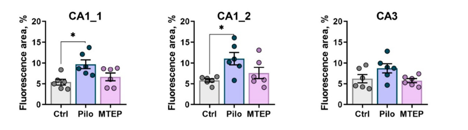
Figure 1: The average number of GFAP-positive sites in the hippocampal regions following experimental treatment protocol.
The investigators next examined astrocytic responses and glutamate homeostasis to better understand the mechanisms underlying MTEP-mediated neuroprotection. During the chronic phase, Western blot analyses showed that expression of the astrocytic marker GFAP was significantly elevated in untreated epileptic rats, reflecting pronounced astrogliosis. This increase was absent in MTEP-treated animals, while immunofluorescence imaging demonstrated that astrocyte activation within the CA1 hippocampal region was partially attenuated following treatment. Although chronic EAAT2 protein expression did not differ significantly between groups, analyses performed during the latent phase revealed that untreated epileptic rats exhibited reduced EAAT2 protein expression despite unchanged mRNA levels. MTEP prevented this decline in EAAT2 protein, suggesting that preservation of glutamate transporter availability may reduce extracellular glutamate accumulation and limit excitotoxic neuronal injury after status epilepticus. In contrast, GFAP gene and protein expression remained elevated during the latent phase despite treatment, indicating that MTEP did not prevent the early astrocytic response to injury but instead reduced long-term astrogliosis after neuronal preservation had occurred. Together, these findings support the hypothesis that maintenance of glutamate clearance rather than suppression of early glial activation may contribute to the neuroprotective actions of MTEP [1].
Behavioral testing demonstrated that MTEP provided little benefit for the neuropsychiatric and cognitive abnormalities associated with chronic epilepsy. Measures of depressive-like behavior using the sucrose preference test showed persistent reductions in sucrose consumption among epileptic animals regardless of treatment, indicating that MTEP failed to alleviate anhedonia. In the open field test, untreated epileptic rats displayed altered spatial preferences characterized by increased time spent in the center of the arena and reduced thigmotaxis, behaviors that the investigators interpreted as reflecting altered stress-coping strategies rather than simple reductions in anxiety. MTEP partially normalized these spatial preferences but had no effect on the marked locomotor hyperactivity characteristic of epileptic rats, as treated animals continued to exhibit elevated movement speed and increased time spent in motion.
Likewise, exploratory behavior remained impaired, with both epileptic groups spending less time investigating unfamiliar objects than healthy controls. Recognition memory assessed by the novel object recognition task also remained significantly compromised after treatment, and MTEP failed to restore cognitive performance despite preserving hippocampal neurons. The investigators concluded that neuroprotection within the hippocampus alone was insufficient to restore cognitive function because widespread alterations throughout epileptic neural networks likely continue to disrupt learning and memory. Overall, the study demonstrated that selective mGluR5 antagonism with MTEP effectively preserves neuronal integrity and partially limits chronic astrogliosis but does not prevent spontaneous recurrent seizures or substantially improve the behavioral and cognitive comorbidities associated with temporal lobe epilepsy [1].
2) The research team of Martin-Fardon et al found that blockade of mGluR5 with MTEP produced robust effects on conditioned reward-seeking behavior but demonstrated distinct actions on cocaine reinforcement compared with reinforcement by a natural reward. All rats successfully acquired cocaine self-administration and developed reliable discrimination between reward-associated and nonreward-associated stimuli during conditioning. Following extinction, reintroduction of the cocaine-associated discriminative stimulus produced strong reinstatement of cocaine-seeking behavior in vehicle-treated animals, whereas presentation of the nonreward cue produced minimal responding. Pretreatment with MTEP dose-dependently suppressed cue-induced cocaine seeking, with significant reductions observed at doses of 1, 3, and 10 mg/kg. At the highest doses, responding was nearly reduced to extinction levels. Analysis of cumulative responding throughout the reinstatement session further demonstrated that MTEP consistently decreased cocaine-seeking behavior across time without increasing inactive-lever responses, indicating that suppression of drug seeking was not attributable to nonspecific behavioral disruption [2].
A similar pattern emerged for conditioned responding maintained by the natural reward. Rats readily acquired SCM self-administration, successfully learned the discriminative stimulus associations, and exhibited robust reinstatement when exposed to the SCM-associated cue after extinction. Surprisingly, MTEP also dose-dependently attenuated cue-induced reinstatement of SCM seeking, with significant reductions occurring across all doses tested. Although cocaine-associated cues elicited responding throughout the entire testing period, SCM-associated cues produced most responding during the first twenty minutes; nevertheless, MTEP effectively suppressed conditioned responding in both paradigms. These findings indicated that mGluR5 antagonism broadly reduces appetitive behaviors controlled by conditioned reward-related stimuli rather than selectively inhibiting cocaine-associated memories or drug-specific cue reactivity. Inactive-lever responding remained negligible throughout testing, demonstrating that reductions in reinstatement reflected selective suppression of motivated responding rather than generalized disruption of operant behavior [2].
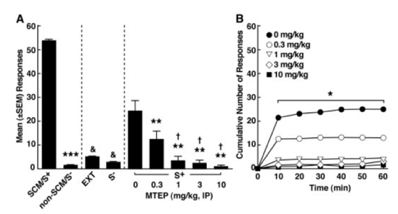
Figure 2: Effects of MTEP on the reinstatement induced by discriminative stimuli related to SCM self-administration.
The effects of MTEP differed substantially when primary reinforcement rather than conditioned reinstatement was examined. During cocaine self-administration under a fixed-ratio 5 schedule, MTEP significantly reduced cocaine intake at the 3 and 10 mg/kg doses, although the dose-response relationship was less pronounced than that observed during reinstatement testing. Cumulative response analyses confirmed that higher MTEP doses consistently reduced cocaine-maintained responding throughout the session. In contrast, MTEP had no significant effect on self-administration of sweetened condensed milk at any dose. Rats maintained stable responding for SCM regardless of treatment, indicating that blockade of mGluR5 selectively diminished the reinforcing effects of cocaine while leaving primary reinforcement by a highly palatable natural reward intact. These findings suggest that mGluR5 contributes more directly to cocaine reinforcement than to reinforcement produced by conventional rewards, even though conditioned motivational responses to both reward types depend on mGluR5-regulated glutamate signaling.
Finally, assessment of spontaneous locomotor activity demonstrated that MTEP produced minimal nonspecific motor impairment. Overall locomotor activity measured across the three-hour recording period did not differ significantly among treatment groups, although the highest dose produced a modest transient reduction during the first eighty minutes of testing. Because MTEP did not affect SCM self-administration despite this slight locomotor effect, the investigators concluded that the reductions in cocaine seeking and cocaine reinforcement could not be explained solely by sedation or impaired motor performance. Collectively, the results demonstrate that mGluR5 antagonism suppresses conditioned reinstatement elicited by both cocaine- and natural reward-associated cues while selectively reducing the primary reinforcing effects of cocaine. These findings identify mGluR5 as a promising therapeutic target for reducing cocaine relapse and cocaine reinforcement, although the comparable suppression of cue-driven natural reward seeking suggests that further investigation is needed to determine whether mGluR5 antagonists could also diminish normal hedonic motivation or produce unintended anhedonic effects [2].
Disclaimer
**LAB USE ONLY**
*This information is for educational purposes only and does not constitute medical advice. THE PRODUCTS DESCRIBED HEREIN ARE FOR RESEARCH USE ONLY. All clinical research must be conducted with oversight from the appropriate Institutional Review Board (IRB). All preclinical research must be conducted with oversight from the appropriate Institutional Animal Care and Use Committee (IACUC) following the guidelines of the Animal Welfare Act (AWA).
Citations
[1] Dyomina AV, Kovalenko AA, Zakharova MV, et al. MTEP, a Selective mGluR5 Antagonist, Had a Neuroprotective Effect but Did Not Prevent the Development of Spontaneous Recurrent Seizures and Behavioral Comorbidities in the Rat Lithium-Pilocarpine Model of Epilepsy. Int J Mol Sci. 2022;23(1):497. Published 2022 Jan 2. doi:10.3390/ijms23010497
[2] Martin-Fardon R, Baptista MA, Dayas CV, Weiss F. Dissociation of the effects of MTEP [3-[(2-methyl-1,3-thiazol-4-yl)ethynyl]piperidine] on conditioned reinstatement and reinforcement: comparison between cocaine and a conventional reinforcer. J Pharmacol Exp Ther. 2009;329(3):1084-1090. doi:10.1124/jpet.109.151357
MTEP HCl is sold for laboratory research use only. Terms of sale apply. Not for human consumption, nor medical, veterinary, or household uses. Please familiarize yourself with our Terms & Conditions prior to ordering.
| File Name | View/Download |
| Coming Soon! |  |
VIEW CERTIFICATES OF ANALYSIS (COA)