

Description
Pyritinol Dihydrochloride Nootropic Powder






| CAS Number | 10049-83-9 |
| Other Names | Pyrithioxin dihydrochloride, Pyrithioxin (dihydrochloride), Pyritinol dihydrochloride, 4-Pyridinemethanol, 3,3′-[dithiobis(methylene)]bis[5-hydroxy-6-methyl-, hydrochloride (1:2) |
| IUPAC Name |
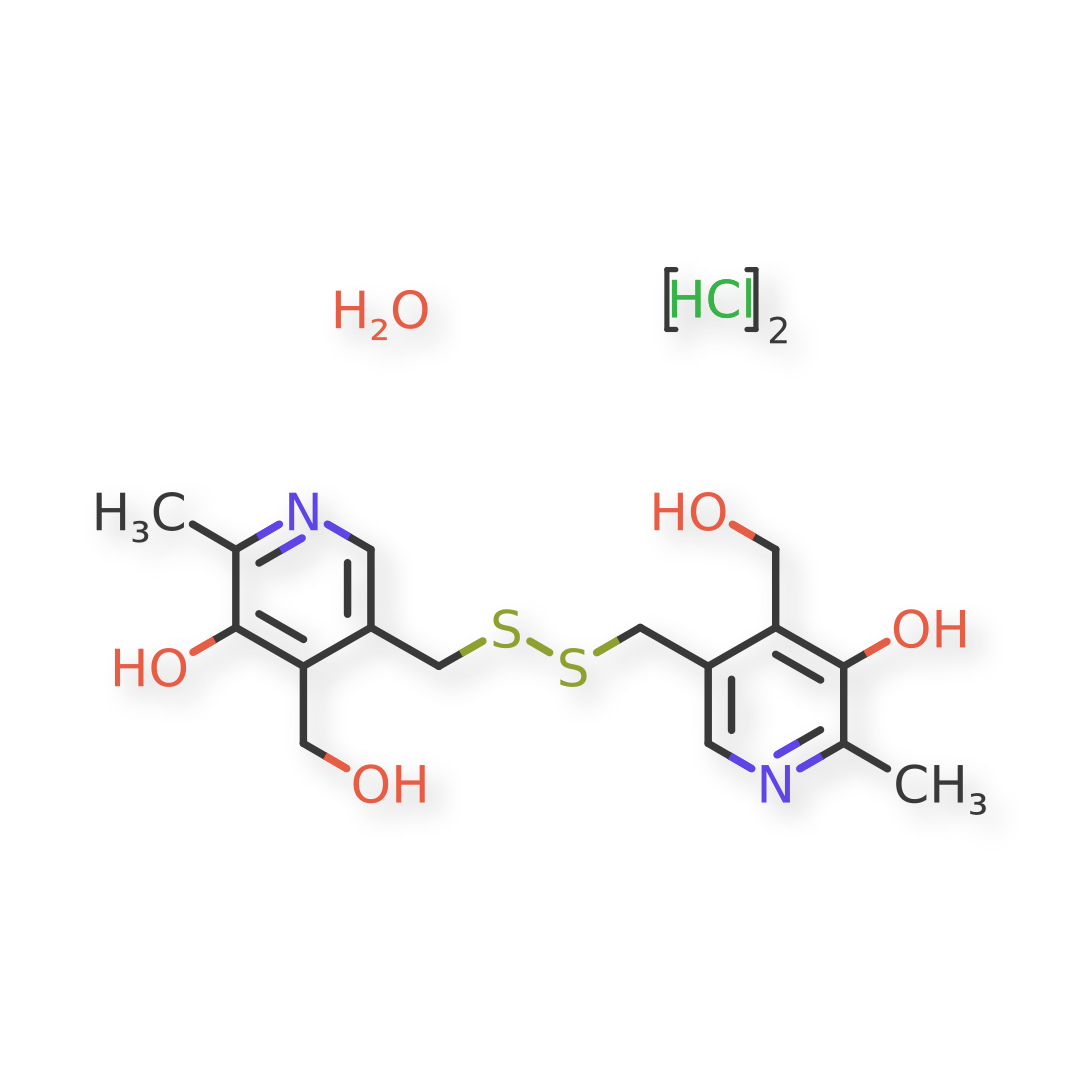
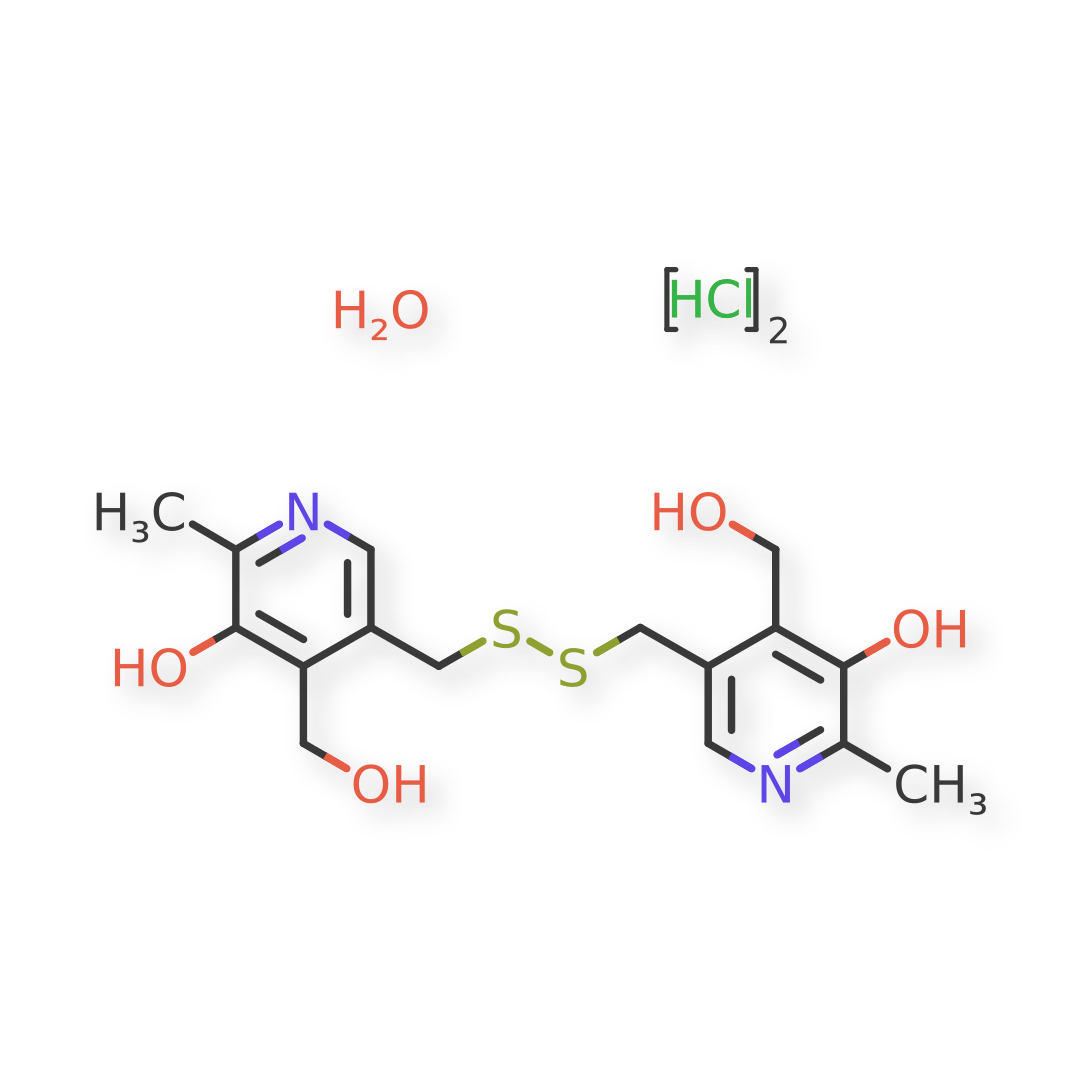
5-[[[5-hydroxy-4-(hydroxymethyl)-6-methylpyridin-3-yl]methyldisulfanyl]methyl]-4-(hydroxymethyl)-2-methylpyridin-3-ol;dihydrochloride
|
| Molecular Formula | C₁₆H₂₂Cl₂N2O₄S₂ |
| Molecular Weight | 441.4 |
| Purity | ≥99% Pure (LC-MS) |
| Liquid Availability | N/A |
| Powder Availability |  N/A |
| Storage | Store in cool dry environment, away from direct sunlight. |
| Terms | All products are for laboratory developmental research USE ONLY. Products are not for human consumption. |
What is Pyritinol Dihydrochloride?
Pyritinol dihydrochloride is a synthetic nootropic compound derived from vitamin B6 that has been investigated for its potential to enhance cognitive performance by improving cerebral metabolism, neuronal communication, and cerebral blood flow. Structurally composed of two pyridoxine molecules linked by a disulfide bridge, pyritinol exhibits pharmacological properties that distinguish it from its vitamin precursor, allowing it to readily cross the blood-brain barrier and influence multiple neurophysiological processes. Experimental and clinical studies have suggested that pyritinol may increase glucose uptake and oxygen utilization in the brain, support cholinergic neurotransmission, reduce oxidative stress, and stabilize neuronal cell membranes, thereby promoting more efficient brain energy metabolism. These mechanisms have led to its evaluation as a therapeutic agent for age-related cognitive decline, vascular dementia, traumatic brain injury, and disorders associated with impaired attention and memory. Although the clinical evidence for its efficacy varies across patient populations, pyritinol continues to be of scientific interest because of its multifaceted neuroprotective actions and its potential role in preserving cognitive function and enhancing mental performance under conditions of neurological stress.
Main Research Findings
1) Administration of pyritinol dihydrochloride was shown to enhance production of D-arabitol, a compound used frequently in the nutrition, chemical, and pharmaceutical industries.
2) Researchers developed membrane sensors to determine the stability of pyritinol dihydrochloride in the presence of degradation products.
Selected Data
1) The study performed by Zheng et al was designed to improve the microbial production of d-arabitol from Candida parapsilosis by combining atmospheric and room temperature plasma (ARTP) mutagenesis with metabolic regulation. Rather than relying solely on strain improvement through mutation, the investigators sought to further enhance product yield by manipulating key metabolic pathways involved in glucose utilization. Particular emphasis was placed on evaluating several metabolic regulators, including pyrithioxin dihydrochloride, which was selected because of its ability to stimulate glucose-6-phosphate dehydrogenase (G6PDH), the rate-limiting enzyme of the pentose phosphate pathway (PPP). Since d-arabitol is synthesized through the PPP, the authors hypothesized that increasing G6PDH activity with pyrithioxin dihydrochloride would redirect glucose metabolism toward d-arabitol biosynthesis and improve production efficiency [1].
The experimental organism used throughout the investigation was Candida parapsilosis, which was maintained in the laboratory and cultured using standardized agar, seed, and fermentation media. Fermentation medium contained high concentrations of glucose together with yeast extract and mineral supplements to maximize d-arabitol production. All media were sterilized prior to use, and cultures were incubated under controlled temperature and shaking conditions throughout the study.
To generate improved production strains, the investigators employed ARTP mutagenesis. Exponentially growing yeast cells were harvested, washed, and adjusted to a standardized concentration of approximately 10⁷ cells/mL before exposure to a helium plasma jet using an ARTP-II mutagenesis system. Cells spread onto sterile metal plates were irradiated for varying exposure times to determine the optimal balance between mutation frequency and cell survival. Following plasma treatment, surviving cells were recovered, serially diluted, and plated on agar media. Mortality rates were calculated using colony-forming unit counts to identify the exposure time that produced the highest probability of beneficial mutations while maintaining sufficient cell viability [1].
Mutant colonies were screened through a multistep selection procedure. Colonies exhibiting larger size and smooth morphology were transferred into seed medium and subsequently fermented in shake flasks containing production medium. After 72 hours of fermentation, d-arabitol concentrations were quantified using high-performance liquid chromatography (HPLC). Mutants producing higher d-arabitol concentrations than the parental strain were selected for further evaluation. The most productive mutants were then examined for genetic stability through eight successive subcultures, during which d-arabitol production was measured after each generation to determine whether the improved phenotype remained stable over time. The highest-performing mutant, designated A6, underwent additional characterization, including microscopic examination of cell morphology and assessment of carbohydrate utilization patterns using multiple carbon sources.
Following identification of mutant A6, the investigators evaluated several metabolic regulators to determine whether manipulation of central carbon metabolism could further increase d-arabitol production. Individual shake-flask experiments examined pyrithioxin dihydrochloride, 4-methylpyrazole (4-MP), amphotericin B, Triton X-100, and Tween 80. Each compound was added separately to fermentation cultures at various concentrations, and d-arabitol production was measured after 72 hours. Pyrithioxin dihydrochloride received particular attention because of its reported ability to activate G6PDH and thereby increase glucose flux through the pentose phosphate pathway. After identifying effective concentrations for each regulator, the authors designed an L9 orthogonal experimental design consisting of four factors at three concentration levels to evaluate whether combinations of regulators produced additive or synergistic improvements in d-arabitol production [1].
To investigate the biochemical mechanisms underlying metabolic regulation, crude enzyme extracts were prepared from harvested yeast cells following sonication and centrifugation. Glucose-6-phosphate dehydrogenase (G6PDH) activity was measured spectrophotometrically by monitoring NADPH formation at 340 nm, providing a direct assessment of pentose phosphate pathway activation by pyrithioxin dihydrochloride. In parallel, alcohol dehydrogenase (ADH) activity was measured through NADH production to evaluate the effects of 4-methylpyrazole on ethanol metabolism. Cell growth was quantified by measuring optical density at 600 nm, while concentrations of glucose, d-arabitol, ethanol, and glycerol were determined using HPLC equipped with a refractive index detector. All experiments were performed in triplicate, and results were expressed as mean ± standard deviation with statistical analysis conducted using OriginPro software [1].
2) This study performed by the research team of El-Bardicy et al developed and validated stability-indicating electrochemical methods for the quantitative determination of pyritinol dihydrochloride and meclophenoxate hydrochloride using polyvinyl chloride (PVC)-based ion-selective membrane electrodes. The primary objective was to create analytical methods capable of accurately measuring intact drugs even in the presence of its degradation products, overcoming limitations of previously published colorimetric, spectrophotometric, electrochemical, and high-performance liquid chromatography methods that lacked stability-indicating capability. In addition to evaluating pure drug substances, the investigators assessed the performance of the proposed sensors in pharmaceutical formulations, degraded samples, and spiked human plasma, making the methods suitable for routine pharmaceutical quality control [2].
The investigation focused heavily on pyritinol dihydrochloride, a nootropic compound structurally derived from vitamin B6 that contains a disulfide linkage susceptible to oxidative degradation. To evaluate whether the proposed analytical methods could distinguish intact drugs from degradation products, forced degradation studies were first performed. Unlike many pharmaceutical compounds, pyritinol lacks ester or amide bonds that readily undergo hydrolysis. Therefore, oxidative degradation was selected as the appropriate stress condition. Approximately 200 mg of pyritinol dihydrochloride was treated with 30% hydrogen peroxide for one hour at room temperature, followed by evaporation of excess peroxide through gentle heating. The degradation products were separated from the intact drug using high-performance thin-layer chromatography (HPTLC) with an n-butanol:acetic acid:water solvent system. The isolated degradation product was recovered from the chromatographic plate, extracted with methanol, and characterized by gas chromatography-mass spectrometry to confirm complete oxidation of the disulfide linkage to the corresponding sulfonate derivative. This degradation product served as the principal interference throughout subsequent analytical validation experiments.
Three different ion-selective membrane sensors were fabricated specifically for pyritinol dihydrochloride. Two sensors employed classical ion-association complexes using sodium tetraphenylborate (TPB) and ammonium reineckate (RNC) as ion-exchange materials, while a third sensor incorporated β-cyclodextrin (β-CD) as the electroactive recognition element. Each membrane consisted of the electroactive compound dispersed within a polyvinyl chloride matrix plasticized with ortho-nitrophenyloctyl ether (oNPOE) to optimize membrane flexibility, ion mobility, and selectivity. Membranes were prepared by dissolving the appropriate components in tetrahydrofuran, casting the solution into Petri dishes, and allowing slow solvent evaporation overnight to produce homogeneous membranes approximately 0.1 mm thick. Circular membrane disks were then mounted onto PVC electrode bodies, filled with an internal reference solution containing pyritinol and sodium chloride, and conditioned overnight in pyritinol solution before use [2].
Electrochemical characterization of the fabricated electrodes involved constructing calibration curves over a broad concentration range. Each electrode was immersed in standard pyritinol solutions while electromotive force (EMF) measurements were recorded using a calibrated potentiometric system equipped with a single-junction calomel reference electrode. Calibration plots relating electrode potential to the logarithm of pyritinol concentration were generated and used to determine electrode slope, detection limits, linear concentration range, response time, reproducibility, and long-term stability. The influence of solution pH was systematically evaluated by measuring electrode responses across acidic and alkaline conditions to identify the optimal operating range for each sensor. The investigators also examined sensor selectivity by exposing the electrodes to common pharmaceutical excipients, inorganic salts, amino acids, sugars, and isolated degradation products to determine whether these substances interfered with pyritinol measurement.
To assess real-world applicability, the validated electrodes were tested using several analytical scenarios. Human plasma samples were fortified with known concentrations of pyritinol dihydrochloride, and drug concentrations were determined directly without extraction or extensive sample preparation. Commercial tablets containing pyritinol were powdered, dissolved in phosphate buffer, and analyzed using the proposed sensors. Laboratory-prepared mixtures containing varying proportions of intact drug and degradation products were also analyzed to determine whether the electrodes could selectively quantify pyritinol despite oxidative degradation. Finally, the accuracy and precision of the new electrochemical methods were statistically compared with established reference analytical procedures using recovery studies and standard addition experiments. These comprehensive validation experiments enabled the investigators to determine the analytical performance, selectivity, robustness, and potential pharmaceutical applications of the newly developed pyritinol-selective membrane electrodes [2].
Discussion
1) The study completed by the research team of Zhang et al demonstrated that combining ARTP mutagenesis with metabolic regulation substantially increased d-arabitol production by Candida parapsilosis. Among the various interventions evaluated, pyrithioxin dihydrochloride emerged as an effective metabolic regulator by stimulating G6PDH activity and increasing metabolic flux through the PPP, although 4-methylpyrazole ultimately produced the largest increase in d-arabitol yield. Overall, the results showed that improving both strain characteristics and metabolic pathway regulation represents an effective strategy for enhancing industrial d-arabitol biosynthesis [1].
Optimization of the ARTP mutagenesis procedure established that plasma exposure time strongly influenced mutation efficiency. Increasing irradiation time progressively increased cell mortality, with approximately 92% mortality observed after 140 seconds of exposure. This level of lethality was selected because previous research indicated that high mortality rates maximize the likelihood of generating beneficial mutations while retaining sufficient surviving cells for screening. Fifty mutant strains were subsequently evaluated for d-arabitol production. Of these, forty-one exhibited improved production compared with the parental strain, demonstrating the high efficiency of ARTP mutagenesis. Four mutants produced more than 25% higher d-arabitol yields, and mutant A6 displayed the greatest improvement, producing 32.92 g/L of d-arabitol compared with 21.38 g/L for the original strain, representing a 53.98% increase. Genetic stability testing showed that mutant A6 maintained consistent production over eight successive generations, indicating that the beneficial mutation remained stable and suitable for industrial application [1].
Further characterization demonstrated that mutant A6 differed morphologically from the parental strain, exhibiting elongated cells while maintaining similar cell width. Although the mutation altered cell morphology and growth characteristics, carbohydrate utilization patterns remained largely unchanged. Both the mutant and parental strains utilized glucose, fructose, sucrose, galactose, maltose, starch, lactose, and glycerol but were unable to metabolize xylose. Mutant A6 displayed superior growth when cultured with glucose, fructose, or sucrose and produced approximately 20% more d-arabitol than the parental strain when glucose served as the carbon source. In addition, ethanol production decreased substantially under several growth conditions, suggesting that ARTP mutagenesis altered intracellular carbon flux in favor of d-arabitol biosynthesis rather than ethanol formation.
A major focus of the investigation was the evaluation of pyrithioxin dihydrochloride as a metabolic regulator. Because G6PDH is the rate-limiting enzyme of the pentose phosphate pathway, the investigators examined whether activation of this enzyme would increase glucose flux toward d-arabitol synthesis. Supplementation of mutant A6 cultures with pyrithioxin dihydrochloride produced a clear concentration-dependent increase in d-arabitol production. The greatest response occurred at a concentration of 2.5 g/L, where d-arabitol production reached 42.87 g/L, representing a 34.4% increase compared with untreated control cultures. Importantly, pyrithioxin dihydrochloride did not simply stimulate overall cell growth; instead, its principal effect was to enhance metabolic efficiency by increasing G6PDH activity. During the first 48 hours of fermentation, product formation remained similar between treated and untreated cultures because cells were primarily undergoing active growth. However, once cultures entered the production phase after approximately 48 hours, d-arabitol accumulation increased markedly in the pyrithioxin-treated group. Measurements of enzyme activity confirmed the proposed mechanism: after 72 hours, G6PDH activity increased by approximately 20.6% relative to untreated cultures. These findings demonstrated that pyrithioxin dihydrochloride successfully redirected glucose metabolism toward the pentose phosphate pathway, thereby increasing the availability of NADPH required for d-arabitol biosynthesis and improving final product yield [1].
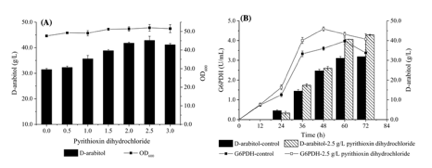
Figure 1: Changes in A) D-arabitol production, and B) G6PDH activity following treatment with pyrithioxin dihydrochloride.
The investigators also evaluated additional metabolic regulators. Inhibition of alcohol dehydrogenase with 4-methylpyrazole (4-MP) redirected carbon away from ethanol production and produced the largest improvement in d-arabitol synthesis, increasing production to 54.96 g/L, a 77.4% increase over untreated cultures. Amphotericin B increased membrane permeability and improved d-arabitol production by 23.8%, whereas the surfactant Triton X-100 increased dissolved oxygen availability and produced a 42.2% increase in d-arabitol concentration. In contrast, Tween 80 provided little benefit.
Finally, orthogonal optimization experiments evaluated combinations of these metabolic regulators. Range analysis indicated that 4-methylpyrazole exerted the greatest influence on d-arabitol production, followed by amphotericin B, pyrithioxin dihydrochloride, and Triton X-100. The optimal combination consisted of 2 g/L 4-MP, 1 mg/L amphotericin B, 2 g/L pyrithioxin dihydrochloride, and 10 g/L Triton X-100, yielding 52.58 g/L of d-arabitol. Interestingly, this combined treatment did not exceed the production achieved with 4-MP alone, suggesting antagonistic interactions or increased metabolic burden when multiple regulators were applied simultaneously. The authors concluded that although pyrithioxin dihydrochloride significantly enhances d-arabitol production by stimulating G6PDH and increasing glucose flux through the pentose phosphate pathway, its greatest value lies as a targeted metabolic regulator rather than as part of a complex multi-regulator strategy [1]
2) The study by El-Bardicy et al demonstrated that the newly developed ion-selective membrane electrodes provided accurate, precise, and stability-indicating determination of pyritinol dihydrochloride in pure drug samples, pharmaceutical formulations, laboratory-prepared degradation mixtures, and human plasma. Among the three fabricated pyritinol sensors, all exhibited analytical performance that closely approached ideal electrochemical behavior while maintaining excellent selectivity toward intact pyritinol despite the presence of structurally similar oxidative degradation products. These findings indicate that the proposed sensors represent practical alternatives to more complex chromatographic methods for routine pharmaceutical quality control [2].
Forced degradation experiments confirmed that oxidation represents the principal degradation pathway for pyritinol dihydrochloride. Treatment with hydrogen peroxide successfully oxidized the drug’s disulfide bridge to form the corresponding sulfonate degradation product. Gas chromatography-mass spectrometry identified the degradation product by its characteristic molecular ion at m/z 233, confirming successful oxidative conversion. The investigators explained that neither infrared spectroscopy nor nuclear magnetic resonance spectroscopy could readily distinguish the parent compound from its degradation product because few major functional groups changed during oxidation, emphasizing the importance of selective electrochemical methods capable of differentiating intact drug from oxidized derivatives.
Electrochemical evaluation showed excellent analytical performance for all three pyritinol-selective electrodes. According to the electrochemical response data, the TPB, RNC, and β-cyclodextrin sensors produced stable near-Nernstian slopes of −30.60, −31.10, and −32.89 mV per concentration decade, respectively. The electrodes responded linearly across low micromolar concentration ranges, with the β-cyclodextrin sensor exhibiting the broadest analytical range, while the TPB and RNC sensors were linear. Mean recoveries approached 100% for all three sensors and standard deviations remained below 1% with correlation coefficients exceeding 0.999, demonstrating excellent linearity, precision, and analytical accuracy. The sensors maintained stable calibration characteristics for approximately four weeks, indicating adequate long-term stability for routine laboratory use. The response time for each electrode was approximately 40 seconds, allowing rapid analysis without prolonged equilibration [2].
Evaluation of pH effects demonstrated that pyritinol measurements were most reliable between pH 2.5 and 4.0. Within this interval, electrode potentials remained stable and linear. At higher pH values, electrode response decreased sharply because of changes in pyritinol ionization and reduced solubility, whereas strongly acidic conditions below pH 2.5 produced unstable responses due to interference from hydrogen ions. The pH-response curves presented on page 6 confirmed these findings and established the optimal operating conditions for quantitative analysis [2].
Selectivity studies demonstrated that the fabricated electrodes effectively distinguished pyritinol from common pharmaceutical excipients, inorganic salts, sugars, amino acids, and degradation products. Although the oxidized degradation product remained structurally similar to the parent compound, the sensors accurately quantified intact pyritinol in mixtures containing up to 33.3% degradation product, confirming their stability-indicating capability. Furthermore, successful analysis of commercial, pyritinol tablets, including pharmaceutical preparations and quality-control samples, produced excellent recovery values comparable to those obtained using established reference methods. Statistical comparisons showed no significant differences in either accuracy or precision between the proposed electrochemical procedures and conventional analytical techniques.
The electrodes also performed well in biological samples. When applied to spiked human plasma, recovery values ranged from approximately 99.7% to 101.1%, demonstrating excellent analytical accuracy without requiring extraction or complex sample preparation. Recovery data confirmed that all three sensors maintained high precision in plasma matrices, supporting their potential application for therapeutic drug monitoring and pharmacokinetic investigations. Based on these collective findings, the authors concluded that the proposed PVC membrane sensors provide rapid response, excellent sensitivity, high selectivity, broad analytical applicability, and reliable stability-indicating performance for routine determination of pyritinol dihydrochloride in pharmaceutical formulations and biological specimens [2].
Disclaimer
**LAB USE ONLY**
*This information is for educational purposes only and does not constitute medical advice. THE PRODUCTS DESCRIBED HEREIN ARE FOR RESEARCH USE ONLY. All clinical research must be conducted with oversight from the appropriate Institutional Review Board (IRB). All preclinical research must be conducted with oversight from the appropriate Institutional Animal Care and Use Committee (IACUC) following the guidelines of the Animal Welfare Act (AWA).
Citations
[1] Zheng S, Jiang B, Zhang T, Chen J. Combined mutagenesis and metabolic regulation to enhance D-arabitol production from Candida parapsilosis. J Ind Microbiol Biotechnol. 2020;47(4-5):425-435. doi:10.1007/s10295-020-02278-4
[2] El-Bardicy MG, Lotfy HM, El-Sayed MA, El-Tarras MF. Stability-indicating electrochemical methods for the determination of meclophenoxate hydrochloride and pyritinol dihydrochloride using ion-selective membrane electrodes. Yakugaku Zasshi. 2007;127(1):201-208. doi:10.1248/yakushi.127.201
Pyritinol Dihydrochloride is sold for laboratory research use only. Terms of sale apply. Not for human consumption, nor medical, veterinary, or household uses. Please familiarize yourself with our Terms & Conditions prior to ordering.
| File Name | View/Download |
| Coming Soon! |  |
VIEW CERTIFICATES OF ANALYSIS (COA)